Alright, let’s talk about what actually makes for a dope analog ham radio station location—because if you’re a ham (or just getting into it), your setup’s only as good as where you plop your gear. I’ve been in the analog ham radio game for years, and let me tell you, I’ve seen folks drop thousands on gear only to kill their signal because they set up their station in the wrong spot. I’m an analog ham radio supplier, so I’m not just spouting random tips—this is stuff I’ve heard from customers who went from barely working 10-mile QSOs to talking across the country, all because they moved their gear. No fancy jargon, just real talk. Analog Ham Radio

First off, let’s start with the big one: high ground beats low ground every single time. I don’t care if you live in a city, suburb, or the sticks—if you can put your station on a hill, elevated balcony, rooftop, even the second floor of a two-story house, do it. Wait, why? Because radio waves (analog ones, anyway—AM/FM, ham bands like HF, VHF, UHF) travel better when they don’t have to fight through a bunch of stuff. Low ground? You’ve got houses, trees, power lines, concrete—all that stuff absorbs or reflects signals like crazy. A customer of mine a few years back lived in a basement apartment in Chicago, swore his signal was garbage, till he moved his setup to his fire escape on the third floor. Suddenly he was hitting repeaters 50 miles out. Wild, right?
But hold up—elevated doesn’t mean “on top of a metal roof.” Wait, let’s clarify that. Metal roofs can block signals if your antenna is too close, because metal acts like a Faraday cage. I’ve had guys tell me they mounted their antenna right to their metal garage roof and their signal was weak. Move it a foot or two away, maybe use a non-conductive mast, and boom—game changed. Also, if you’re in the city, rooftop is great, but watch for local rules. Some cities have height limits for antennas, or HOA stuff that says you can’t put a big antenna on your roof. So high ground is key, but always check your local ordinances first—no sense buying a sweet antenna just to have to take it down a week later.
Next up, less clutter = better signal. What kind of clutter? Power lines, concrete walls, metal appliances, even thick trees. Let’s break that down. Power lines—specifically high-voltage ones—they create electrical noise that messes with analog signals. If your desk is right next to a bunch of power lines running into your house, that noise is gonna drown out weaker stations. My advice: move your gear at least 10 feet away from any big electrical stuff—power cords, transformers, that fancy fridge with the built-in screen. Even your computer can cause noise if it’s too close to your radio. Keep them separate.
Trees, especially big, leafy ones—they’re not great either. Leaves absorb UHF and VHF signals, and branches can reflect them weird. If you have to mount an antenna outside, don’t tuck it deep in a bunch of oak trees. If you’re operating inside your station room (most hams do their main operating indoors, right?), pick a room that’s not surrounded by thick concrete. Basements are the worst for this—concrete floors and walls block so much signal. I know some hams who run a second antenna just for when they’re in the basement, but the main operating spot should be a room with drywall, not concrete, if possible.
Now, let’s talk about rural vs. urban, because that changes everything. If you’re in the middle of nowhere—great, that’s prime real estate. Why? Because there’s almost no man-made clutter. My favorite customers are guys with a few acres, they can mount a big antenna on a mast, no HOA, no power line noise, nothing blocking their signal. I had a guy out in Wyoming a couple years ago who was talking to a ham in France on HF from his backyard—all because he had open space. But even rural folks have a thing to watch out for: things like cell towers, wind turbines, even grain silos can cause noise if they’re too close. Not as bad as city stuff, but still something to keep in mind.
Urban hams? Don’t sweat it—you can still have a solid station. The key here is getting your antenna above all the other city stuff. Balconies are clutch for apartment dwellers. If you have a south-facing balcony (depends on your band, but generally, less obstacles are good), mount your antenna there. I’ve had apartment customers who went from talking to local hams only to hitting repeaters 30+ miles away just by switching from an indoor antenna to a balcony antenna. Also, in cities, repeaters are usually on tall towers, so if you can get your antenna as high as those repeaters, you’ll crush it.
Wait, indoor vs. outdoor stations. A lot of new hams start with indoor antennas, and that’s fine, but they’re limited. If you can run an outdoor antenna, do it—but not just anywhere. If you have to use an indoor antenna, pick a spot near a window that doesn’t have a lot of metal (like a metal-framed window is worse than a wood or vinyl one). I’ve seen guys put a random wire antenna along the top of their living room window and get way better results than a little rubber duck on their desk.
Another big one: avoid “dead zones” in your house. Every house has spots where signals are just garbage—usually near the center of the house, behind big walls, under stairwells. I had a customer who worked from home, his office was in the middle of his ranch house, and he could barely transmit. Moved his station to the spare bedroom at the end of the hall, and his signal strength went up 2 S-units (for those who don’t know, S-units measure signal—more is better). It’s like cell phone dead zones—same idea, radio waves follow the same basic rules of not going through thick stuff easily.
Wait, what about ground planes? A lot of new hams don’t even know what a ground plane is, but it’s super important for VHF and UHF. If you’re using a vertical antenna (most common for VHF/UHF), a ground plane helps the signal go out better, not just up and down. So if you’re mounting an antenna outdoors, make sure it’s got a good ground plane—either using the coax shield, or adding a few radial wires (just lengths of wire pointing out horizontally) if you’re on a budget. But where does that tie into location? Well, if your antenna is on a metal mast, that can act as a partial ground plane, but make sure the mast isn’t too close to other metal stuff, like your gutters or a neighbor’s AC unit. That’ll mess with the ground plane, which kills your signal.
Also, let’s talk about interference from other electronics. This is a huge one that a lot of new hams miss. If your station is near things like Wi-Fi routers, gaming consoles, smart speakers, even LED lights—those all create electrical noise that interferes with analog signals. I had a customer who spent hours troubleshooting his station, switching antennas, moving masts, only to find out his Wi-Fi router was right next to his radio’s power supply. Once he moved the router to the other side of the room, his noise floor dropped by like 50%. Moral of the story: test your noise floor (most radios have a way to check this, or just listen for static) when you set up. If it’s super noisy, move electronics around till the static goes away.
What about for HF, the longer bands? HF signals bounce off the ionosphere, so location there is a little different, but still matters. For HF, you want an antenna that’s as high as possible, but also open to the horizon—no big hills or buildings blocking where the signal would bounce. A lot of HF hams have antennas pointing north, south, east, west because they’re talking to different parts of the world, but the main thing is no obstructions. If you’re in a valley, HF can be tricky because the signal has to climb out of the valley to hit the ionosphere. So even for HF, high ground is better.
Wait, let’s throw in some real-world examples I’ve seen as a supplier. Last year, I had two customers in the same neighborhood, same house size, same gear. One set his station in the basement, got 1 S-unit signal, could only hit local repeaters. The other moved his station to the second-floor attic (it was finished, so no insulation blocking too much), mounted a small vertical antenna out the attic window, and was talking to hams in Canada within a week. Same gear, different location—that’s how much this matters.
Also, don’t sleep on weather. Wait, location affects weather, which affects your antenna. If you’re in a place with a lot of rain or snow, make sure your antenna mount is secure, but that’s more maintenance. But for signal, heavy rain can absorb UHF/VHF signals, so if you’re in a super rainy area, maybe aim for lower bands that bounce better. But that’s a side note—more about picking a location where your antenna won’t get damaged, which is part of setting up a good station.
Oh, and one last thing I can’t stress enough: line of sight. For VHF and UHF, line of sight is basically non-negotiable. Those signals go straight, not bouncing like HF. So if there’s a hill between you and the repeater you’re trying to hit, you’re not gonna make it. So pick a location where your antenna has a clear line of sight to the repeaters you use most. Most hams will use sites like RepeaterBook to check where repeaters are, then go to a high spot in your area that’s pointing towards those repeaters. That’s a quick hack for urban and rural hams alike.
Let me wrap this up with a quick checklist, because I know y’all love that. 1. Prioritize elevated locations (second floor, rooftop, balcony) over basements or ground level. 2. Clear as much clutter as possible—power lines, thick walls, metal stuff, dense trees. 3. Avoid dead zones in your house/property; test signal strength in different spots. 4. For VHF/UHF, check line of sight to your go-to repeaters. 5. Keep electronics like routers, fridges, computers away from your radio to cut down on noise. 6. Always check local rules before mounting an outdoor antenna—HOAs, city ordinances, height limits.
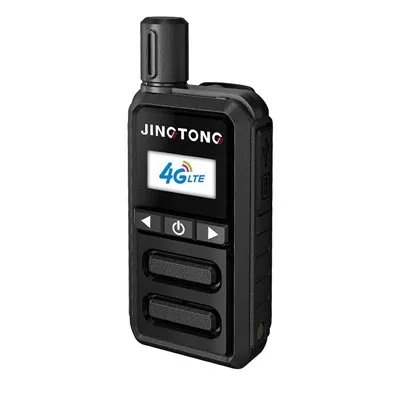
At the end of the day, I’m here as an analog ham radio supplier, not a hobby guru, but I’ve heard enough success stories (and enough horror stories from guys who messed up their setup) to know that location is half the battle. Your gear’s only as good as where you put it. If you’re just starting out, or looking to upgrade your station’s location and gear, we’ve got all the analog ham gear you need—antennas, masts, radios, everything. Hit us up to chat about your setup, no pressure, just real advice for fellow hams. We’re here to help you get the best signal possible, no matter where you are.
3 Watt Walkie Talkie References:
- "ARRL Antenna Book," American Radio Relay League, 2022.
- "Radio Wave Propagation for Dummies," Wiley Publishing, 2021.
- "Ham Radio Station Setup Guide," Amateur Radio Relay League, 2023.
- "Urban Ham Radio Operating Tips," QST Magazine, Vol. 107, No. 4, April 2022.
- "HF Propagation and Station Location," Ham Radio Science Journal, Issue 18, 2021.
Jingtong (Quanzhou) Electronics Co., Ltd.
We are one of the most professional analog ham radio manufacturers and suppliers in China, specialized in providing high quality customized service. We warmly welcome you to buy durable analog ham radio made in China here from our factory. For price consultation, contact us.
Address: No.288, Si Huang Industry Zone, Xia Mei Town, Nan An, Quanzhou, Fujian province, China 362302
E-mail: jtdjj@jtdjj.com
WebSite: https://www.jteradio.com/
