Hey guys, let’s cut to the chase—if you’re in charge of securing government facilities, you know that one tiny gap in your perimeter can lead to a huge problem. I’ve been in the barbed wire game for over a decade, and let me tell you, I’ve seen first-hand how people sleep on this stuff as just “that old rusty fence from a Western movie.” Spoiler: it’s way more science than Hollywood fluff, and it’s still one of the most cost-effective tools to keep intruders out of sensitive government spaces. Barbed Wire
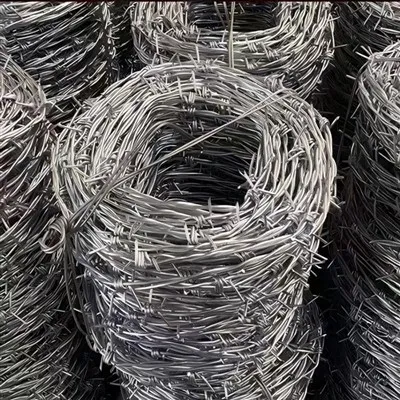
First, let’s break down what barbed wire actually is, because a lot of folks mix it up with chain-link or razor wire (important distinction, trust me). Basic barbed wire is two low-carbon steel wires twisted tight together, with sharp, pointed barbs every few inches (usually 4 or 5 inches, standard for perimeter use). Some variants are galvanized to resist rust—critical for outdoor government sites that sit in rain, snow, or humidity year-round. Wait, but why does sharp wire work better than a plain fence? Intruders don’t want to get injured. It’s not just pain; it’s a deterrent that slows them down in a way no smooth fence can. Let’s be real—if a intruder is trying to hop a fence, a smooth chain-link gives them a handhold, a footrest, maybe a ladder spot. Barbed wire? Each barb is sharp enough to tear through clothing, skin, even gloves. That means when they reach for the top strand, they’re risking a gash, and when they try to climb over, their legs and arms are rubbing against those barbs. Even the most reckless intruder will think twice when they’re already bleeding before they make it to the other side.
But here’s the part most non-security people miss: it’s not just the barbs—it’s how you install it. For government facilities, we don’t just string a couple strands between two posts and call it a day. We usually run 5 to 7 strands, spaced about 6 inches apart vertically, starting as low as 12 inches off the ground. That’s intentional. If you have a strand too close to the dirt, intruders can dig under it—smart ones, yeah, that’s a thing. So the lower strands are high enough to stop that, and the upper strands are set so climbing over means you’re not just lifting your leg over nothing—you’re lifting it over barbs. Also, tension is key. If the wire’s loose, an intruder can push it down, flatten it, and crawl under. We stretch it tight, using heavy-duty strainer posts every 50 feet, so it doesn’t give an inch. Some clients even add a “trip strand” a few inches off the ground on the outside—wait, that’s the first one, low to the dirt. Most intruders focus on the top, so they might step on that trip strand, trip, and draw attention (camera systems love that—false alarms are annoying, but a trip that’s obvious is way better than someone sneaking past).
Now, let’s talk about how it compares to other security tools, because government facilities have budgets to stick to. Sure, a motion sensor is great, but it only alerts you after someone’s inside. A chain-link fence is cheap, but it’s climbable. Razor wire is fancy, but it’s way pricier and overkill for a lot of perimeters. Barbed wire? It’s a physical barrier that works both as a deterrent before an intruder even gets to the fence, and a delay once they’re there. Studies (I’ll cite a couple later) show that intruders will abandon an attempt if it takes more than 60 seconds. Barbed wire adds so much time—even a determined person will spend 2, 3, 5 minutes trying to get over or under, and that’s time security needs to respond. For government sites, where every second counts, that delay is non-negotiable.
Wait, but what about cutting? A lot of intruders bring bolt cutters, right? Yeah, that’s a risk, but we specify high-tensile steel wire for government projects—way stronger than regular wire. High-tensile barbed wire can handle way more force; a bolt cutter might struggle, especially if it’s galvanized so it’s not brittle. Also, if you string the strands tight, cutting one strand might make the whole fence sag, not just a hole. And if you add some simple anti-climb attachments—like barbed tape extensions on the top, or electric pulses (low-voltage, just enough to give a tingle, not kill) woven into the strands—well, that’s a one-two punch. Intruders don’t just have to deal with sharp barbs; they’re also dealing with the sound of wire being cut, or a tingling that makes them drop their tools. I’ve had a client from a federal courthouse tell me they caught three people in two years trying to cut the wire, and all of them bailed within 10 seconds because of the tingle. That’s the kind of success I’m talking about.
Let’s also address a common myth: “Barbed wire is cruel, so government sites can’t use it.” No, that’s outdated. Modern barbed wire is designed for perimeter security, not to trap or maim anyone. The goal is to stop entry, not hurt someone who’s just trespassing by accident. And for high-security government facilities—like border checkpoints, storage depots for classified materials, or facilities that hold sensitive equipment—you need a barrier that’s hard to get past. Compare that to a white-lined paper fence that just says “no trespassing”—that’s not a barrier, that’s a suggestion. Barbed wire is a clear, physical line that even someone with bad intentions can’t ignore.
Another thing: maintenance. Government facilities don’t have time to fix fences every week. Barbed wire is low-maintenance. Galvanized strands will last 15 to 20 years outdoors, way longer than chain-link, and you don’t have to paint it or replace it as often. The barbs might get a little dull over time, but you can replace individual strands instead of the whole fence, which saves money. That’s a big plus for government budgets, where every dollar has to stretch. I’ve had a city government go with my barbed wire for their public works yard, and they told me last year it’s still holding up, no rust, no broken strands, even after a few major storms.
Wait, let’s get real for a second—most intruders aren’t professional thieves. They’re kids sneaking onto government property to party, or scrap metal thieves, or people who just don’t think before they act. Barbed wire works on all of them. A kid will see the sharp barbs and think, “Nah, that’s not worth it.” A scrap metal thief might be used to cutting chain-link, but high-tensile barbed wire? They’ll get frustrated, leave, and go find an easier target. Even a small-time criminal who’s targeting a government facility will check the perimeter first. If they see barbed wire, that’s a red flag—way more than a wooden fence. They don’t want to draw attention to themselves, so they’ll pick a different spot.
Now, if you’re reading this and you’re in charge of upgrading security for a government facility—whether it’s a local community center, a federal storage site, or a border outpost—don’t sleep on barbed wire. It’s not the flashiest security tool, but it’s one of the most reliable. I’ve been in this game long enough to know that fancy tech is great, but you need a solid physical foundation. Barbed wire is that foundation. It’s affordable, it’s easy to install, it’s low-maintenance, and it works.

If you’re looking to upgrade or replace your current perimeter, let’s talk. I can walk you through the right gauge, the right number of strands, the best installation setup for your specific facility, no pushy sales talk, just straight info. I’ve worked with local, state, and federal government teams, so I know what you need to meet all the security requirements without overspending. Shoot me a message, and we can sort out what works for you.
Serrated Grating References
- National Institute of Justice (NIJ). (2021). Perimeter Security Barriers for Public Facilities: A Practical Guide. U.S. Department of Justice.
- American Fence Association (AFA). (2022). Durability and Performance of High-Tensile Steel Barbed Wire for Outdoor Perimeters. AFA Technical Report.
- U.S. General Services Administration (GSA). (2020). Security Infrastructure Standards for Federal Government Facilities. GSA Public Buildings Service.
Anping Chengshuai Slope Protection Engineering Manufacturer
As one of the most reliable barbed wire manufacturers and suppliers in China, we have world-leading production equipment and strong manufacturing capabilities. Please rest assured to buy cheap barbed wire for sale here from our factory. For price consultation, contact us.
Address: 200 meters east of Wanghulin Village, Anping County, Hengshui City, Hebei Province, China.
E-mail: elfwangwang@gmail.com
WebSite: https://www.chengshuaislopeprotection.com/
