If you’ve ever stared up at a solar farm stretching across rolling hills or glanced at the panels on your neighbor’s roof, you’ve probably thought about how sunlight turns into usable power. You might have heard about inverters, panels, or batteries, but here’s a secret most people don’t talk about: power inductors are the unsung heroes holding the whole photovoltaic (PV) system together. As a guy who’s been selling inductors to solar installers and system designers for over a decade, I see firsthand how these small, often overlooked parts keep PV systems from wasting power or crashing. Let’s break this down like I would over a coffee at a trade show—no fancy jargon, just real talk about what inductors actually do in a solar setup. Power Inductor
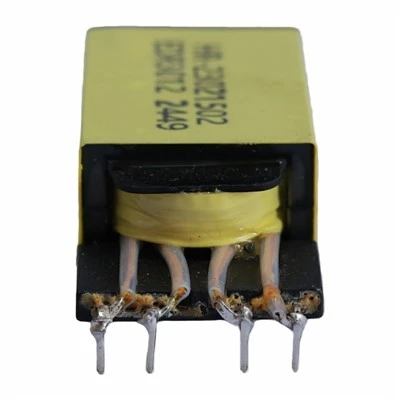
First, let’s get super basic for anyone who’s new to this. PV panels make DC power, right? The kind batteries use, not the AC that runs your fridge or lights. But here’s the thing: that DC power from panels isn’t steady. Sunlight doesn’t shine at the same strength all day—clouds block it, the angle of the sun changes, evening rolls around. And when power is inconsistent, bad things happen. It gets wasted, parts overheat, or it can’t connect to the grid safely. That’s where inductors come in. Think of an inductor like a power dam, but instead of holding back water, it holds back excess electrical current and releases it slowly. No, really—its core job is “smoothing” that messy DC power into something usable, both before it gets turned into AC and when it’s stored in batteries.
Wait, let’s get specific about where this happens in a solar system. I usually start with the panels: they connect to what’s called a charge controller or a microinverter, depending on the system size. Both need inductors to do their thing. Let’s talk about grid-tied systems first—those are the ones that send extra power back to the utility company. When the DC from the panels hits the inverter, the inverter has to flip it into AC. That flip process is called switching, and it creates these tiny, rapid spikes in current. Without an inductor, those spikes would make the AC power super choppy—like a song skipping nonstop. Your appliances would act weird, and the utility might not even let you connect to their grid because it’s not up to code. The inductor calms those spikes down, making the AC smooth enough to use.
Then there’s batteries, which are huge in off-grid systems (think cabins or remote farms) or even grid-tied ones with battery storage. When you charge a battery with solar power, the current coming from the panels can jump around. Batteries hate that—constant spikes and drops in current shorten their life by a lot. The inductor acts like a buffer here: when the current from the panels surges, the inductor absorbs the extra, stores it temporarily in its magnetic core, and releases it at a steady rate to the battery. No more stress on the battery, which means longer life and less need for expensive replacements. That’s a big deal—batteries are one of the most costly parts of a PV system, so saving them is huge for installers and homeowners.
I also work with a lot of people doing microinverter setups—those are the small inverters attached to every individual solar panel, popular for homes where some panels are shaded. Each microinverter needs its own small inductor, and I’ve seen the difference between using a cheap one vs. a good quality one. Last year, a small installer came to me complaining that their microinverters were dying left and right in a project for 20 homes. Turned out they were using the cheapest inductors from a random supplier—they overheated under the constant switching, and the microinverters burned out as a result. Switched them to our high-temperature, precision-wound inductors, and their failure rate dropped to almost zero. That’s when I really realized: inductors aren’t just “parts”—they’re the reason a PV system works reliably, not just on paper.
Another spot where inductors show up is in maximum power point tracking (MPPT) charge controllers. If you’ve ever heard that term, it’s the brain that tweaks the voltage from the panels to get the most power possible, even when the sun is weak. MPPT controllers rely on a switching circuit, and that circuit needs an inductor to step up or step down the voltage as needed. Like, on a cloudy morning, the panels might only put out half their normal voltage, so the controller uses the inductor to “boost” that voltage up to match what the battery or inverter needs. Without a quality inductor here, the MPPT can’t do its job well—you lose 10-15% of your solar power, which is a ton over a year. For a 5kW home system, that’s like losing enough power to run your dryer every week.
Now, let’s talk about the nitty-gritty that matters if you’re actually designing or maintaining a PV system. Not all inductors are the same, and using the wrong one can be a headache. First, size matters—but not just physical size. It’s about inductance value (measured in microhenries, μH) and current rating. If you use an inductor that’s too small for the amount of current flowing through it, it’ll get hot, waste power, and fail. If it’s too big, it adds extra cost and weight that you don’t need. That’s why we work closely with installers to figure out exactly what their system needs—we don’t just send a box of parts and cross our fingers.
Then there’s the core material. A lot of cheap inductors use iron cores, which lose power as heat when the current switches. Our inductors use ferrite cores or powdered iron cores, which are way more efficient—less heat, more power gets where it’s supposed to go. That efficiency translates to more money in the customer’s pocket, because every watt not wasted is a watt they use or sell back to the grid. Also, for outdoor systems (solar panels are exposed to sun, rain, temperature swings), we use conformal coating on our inductors to keep moisture and dust out. I’ve seen installers skip that, and a year later, their inductors corrode and the whole system goes down. It’s a small extra cost upfront that saves a lot of hassle later.
Let’s not forget about emerging tech in PV—like bifacial panels (the ones that absorb sunlight from both sides) or high-power systems for commercial farms. These are putting more stress on every part of the system, so inductors have to step up too. Commercial solar farms with 1MW+ arrays are using higher-voltage panels and faster switching inverters, which means their inductors need to handle more current and higher frequencies without losing efficiency. Our team has been developing custom inductors for these projects, because off-the-shelf parts just can’t keep up. One big solar company in Texas hit us up last year because their old inductors were failing in the 110°F heat out in the desert. We designed a custom high-temperature inductor that runs cool even in triple digits, and they haven’t had a failure since. That’s the kind of problem-solving I love—inductors aren’t one-size-fits-all, and ignoring that is a mistake.
I get why people overlook inductors. When you look at a solar system, you see big panels and the bulky inverter, not the small, black component tucked inside the inverter or charge controller. But here’s the thing: if the inductor fails, the whole system stops working. No power from panels, no power to the battery, no power to the grid. That’s why I always tell my customers—don’t cut corners on inductors. The $2 extra you spend on a quality inductor will save you hundreds in repairs and lost power over the life of the system.
Now, if you’re an installer, systems designer, or even a homeowner who’s looking to upgrade or install a PV system, chances are you’re not here to just read about inductors. You need to make sure your system runs well, doesn’t waste power, and lasts. I’ve spent 12 years in this game, working with everyone from small residential installers to big commercial solar firms, and I can tell you that the right inductor supplier makes all the difference. We test every single inductor before it leaves our warehouse, offer custom solutions when off-the-shelf parts don’t work, and provide support from the design stage all the way through installation.

If you’re tired of dealing with inductors that overheat, fail too soon, or don’t fit your system’s needs, I’d love to chat. We can go over your project specs, figure out exactly what kind of inductors you need, and make sure you don’t have to deal with those headaches anymore. Drop me a line whenever works for you.
Low-voltage Transformer References
- Fuchs, E. F., & Masoum, M. A. S. (2008). Power Quality in Power Systems and Electrical Machines. Academic Press.
- Solar Energy Industries Association (SEIA). (2023). Solar System Component Basics. SEIA.
- Rashid, M. H. (2017). Power Electronics: Circuits, Devices, and Applications (4th ed.). Pearson.
- International Electrotechnical Commission (IEC). (2021). IEC 61683: Photovoltaic systems – Power conditioners – Performance requirements. IEC.
- Energy Storage Association (ESA). (2022). Battery Storage System Design and Maintenance Guidelines. ESA.
Dongguan Hensiron Electric Co., Ltd.
As one of the most professional power inductor suppliers in China, we have world-leading production equipment and strong manufacturing capabilities. Please feel free to buy high quality power inductor made in China here from our factory. Customized orders are welcome.
Address: Building 4, Xinxing Industrial Zone, Wangao Road, Wanjiang Street, Dongguan City, China
E-mail: jessica@dghensiron.com
WebSite: https://www.dghensiron.com/
