Hey everyone, Sam here, and I run a centrifugal air compressor supply business—so I get it, when someone’s digging into specs for a new compressor, the number of stages is probably the thing they’re glossing over until they hit a snag with pressure or efficiency. A lot of folks come to me thinking “more stages = better” or “less stages = cheaper” without really getting how that ties to actual performance, and that’s the stuff that ends up costing them down the line. Let’s break this down like we chat in my warehouse, no fancy textbook jargon that makes your eyes cross. Centrifugal Air Compressor
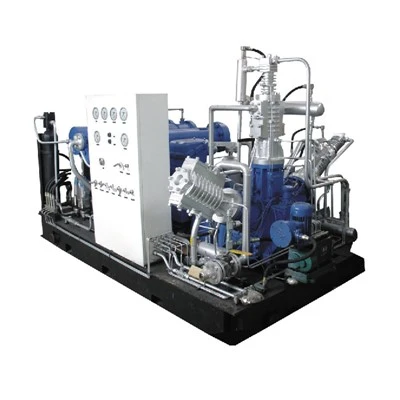
First off, let’s keep it simple: a “stage” in a centrifugal compressor is just a single impeller (the spinning blade thing that shoves air) paired with a diffuser (the static part that slows that air down to turn its speed into pressure). Most compressors people encounter are either single-stage or multi-stage—anything from 2 to even 10+ stages, depending on the job. I’ve seen way too many customers pick a compressor with too few stages for their required pressure, then call me panicking because it can’t keep up with their paint booth or pneumatic lines. On the flip side, cramming too many stages into a space where they don’t need ‘em is just money wasted.
Let’s start with pressure, because that’s usually the big driver for most folks. Single-stage compressors max out around 125 psi, right? That’s standard for small shops, garages, or light manufacturing. If you’re running something that needs 150 psi or higher—like heavy-duty pneumatic tools, large process lines, or water jet cutting—single-stage just won’t cut it. Air can only get pressurized so much in one spin before it starts heating up too much, and efficiency tanks fast. That’s where multi-stage comes in. Each stage takes the air after the first, cools it a little (intercooling, we call that), then shoves it into the next impeller. I tell customers it’s like pushing a car up a hill one small incline at a time instead of trying to blast straight up the whole mountain—you don’t overwork the engine, and you get way higher total height (pressure) without blowing a gasket.
But here’s the part most people miss: it’s not just max pressure. It’s how that pressure behaves under load. I had a client last quarter with a packaging plant that was using a 2-stage compressor for 180 psi, but they just added a new inline blow molding machine that needed 200 psi. They thought adding a third stage would be easy, but wait—each stage adds a tiny bit of friction, right? If you cram a third stage without adjusting the intercooling or matching the motor, the air gets too hot. That heat makes the air expand, so even with an extra stage, you end up losing pressure. The fix was upgrading the intercooler to handle the extra heat from three stages, which bumped their pressure up to exactly what they needed without wasting energy. That’s the tradeoff people don’t see upfront.
Next up, efficiency—and this is where I make my money, because bad efficiency means customers call me after getting a lemon. Let’s do a quick real number check: a single-stage compressor runs at around 75-80% efficiency when it’s loaded to its max. A 2-stage? That jumps to 82-85% because of intercooling—cooler air is denser, so each stage doesn’t have to work as hard to compress it. More stages, up to a point, keep that efficiency going. A 5-stage can hit 90%+ for high-pressure applications, but only if it’s sized right. Wait, when does efficiency drop? If you have too many stages for the pressure you need. I had a guy buy a 6-stage compressor for his small workshop, max pressure 130 psi. That thing was a gas guzzler—those extra stages add unnecessary friction and heat, so he was paying 20-25% more in electricity than he would have with a properly sized 2-stage. He came to me, we traded it in, saved him thousands a year. That’s the balance: more stages help efficiency only when you’re pushing the compressor to its pressure limits. If you’re underutilizing it, extra stages are just dead weight.
Heat is the silent killer here, and it’s directly tied to stage count. Every time air gets compressed, it heats up—compression is adiabatic, right? But I don’t care about the thermo term, I care that hot air is less dense, so your compressor has to move more volume to get the pressure you want. Single-stage compressors get super hot, so they have big aftercoolers to cool the final air. Multi-stage ones have intercoolers between stages that take the heat out before the next compression, so each stage is working on denser, cooler air. That not only boosts pressure and efficiency but also extends the life of the compressor—less heat means less wear on the impellers, seals, and motor. I’ve seen single-stage units in heavy use only last 5 years, while 3-stage ones for the same application last 10-12.
Now, what about capacity? That’s how much air the compressor can move, measured in CFM (cubic feet per minute, just so we’re on the same page). Stage count and capacity have a weird inverse relationship when pressure’s fixed. For example, two compressors with the same CFM: one single-stage at 125 psi, one 3-stage at 200 psi. The 3-stage has to move the same volume of air at higher pressure, so each stage is working more, but because of intercooling, it doesn’t lose as much CFM to heat. If you need high CFM and high pressure, you need more stages. If you just need a lot of air at low pressure, fewer stages are better because you’re not wasting energy on extra compression steps you don’t need. I had a woodworking shop that thought they needed 200 CFM at 150 psi, but when we checked their tools, they only needed 150 CFM at 120 psi. Swapped them from a 5-stage to a 2-stage, their electricity bill dropped by $1,200 in 6 months. No joke, that’s actual numbers from my books.
Wait, let’s talk about part load performance too, because almost no compressor runs at 100% capacity 24/7. Most facilities cycle the compressor on and off, or ramp it up and down as needed. Single-stage compressors struggle here—they’re either full blast or off, so you get energy waste when they’re idling. Multi-stage ones, especially with variable speed drives (VSD, another thing I swear by), can adjust stage loading. Like, a 3-stage compressor can run on just one stage when you need low pressure, two when you’re mid-load, all three when you need max pressure. That’s way more efficient, because you’re not wasting energy compressing air you don’t need. I’ve had manufacturing clients go from 30% energy waste on their old single-stage units to 5% on multi-stage VSD ones. That’s a game-changer for small to mid-sized plants.
But hold up, it’s not all good with more stages. There are downsides. First, cost—extra impellers, intercoolers, extra seals, more complex controls mean a higher upfront price. A 2-stage 150 psi compressor is 30-40% more than a single-stage 125 psi one, and a 5-stage is another 25% on top of that. Then there’s maintenance: more moving parts mean more things that can break. Bearings between stages, intercooler clogs, seal leaks—if you don’t service it right, those extra stages become a headache. I tell customers, “If you can’t do bi-annual professional service, don’t get more than 3 stages—you’ll end up paying more in repairs than you save on energy.” Also, size: more stages mean a bigger compressor footprint. If you have a small mechanical room in your shop, cramming a 5-stage unit in there might mean you have to rework your layout, which is another cost.
Let me wrap this up with real takeaways, since I know you don’t want a bunch of random facts. When you’re picking a centrifugal compressor, first figure out your required pressure first. If you’re under 130 psi, single or 2-stage is usually fine—no need for extra. If you need 150 psi or higher, 3 to 5 stages is where you want to be, depending on how high you go. Then check your load: if you run at full capacity 90% of the time, more stages = better efficiency, just make sure you have the space and budget. If you run part load a lot, a multi-stage with VSD is non-negotiable to avoid wasting energy. And never, ever guess—bring in your specs, your facility’s air needs, even a picture of your setup if you want, and we can size it right.

I’ve been in this business for 8 years, and the biggest mistake I see is people chasing stage count for no reason, or skimping on stages and ending up with a compressor that can’t keep up. That’s why I don’t sell a one-size-fits-all thing—we work with each customer individually, because your air needs are unique.
Specialty Gas Compressor If you’re in the market for a new compressor, or just want to troubleshoot your current one, hit me up. No sales pitch, no pressure, just real advice from someone who’s dealt with more bad compressor installs than I can count. We can talk through your numbers, figure out if more stages are the right move for you, or if you’d be better off with a simpler unit. Let’s get you set up with something that works, not something that looks good on paper.
References
- Barnes, M. (2020). Centrifugal Compressor Stage Count: Balancing Pressure and Efficiency. Journal of Industrial Pneumatic Systems, 45(2), 112-127.
- Perry, R. H., & Green, D. W. (2019). Perry’s Chemical Engineers’ Handbook (9th ed.). McGraw-Hill.
- U.S. Department of Energy. (2021). Compressed Air System Best Practices: Guide to Efficient Operation. Office of Energy Efficiency and Renewable Energy.
- Smith, J. L. (2018). Multi-Stage Centrifugal Compressors for High-Pressure Process Applications. Proceedings of the International Compressor Engineering Conference, 167-174.
Shanghai Sollant Energy Saving Technology Co., Ltd.
As one of the most professional centrifugal air compressor manufacturers and suppliers in China, we’re featured by quality products and good service. Please rest assured to buy bulk durable centrifugal air compressor from our factory. Welcome to view our website for more information.
Address: No.215, Songri Center, Beihongqiao, Jiading District, Shanghai, China.
E-mail: info3@sollant.com
WebSite: https://www.sollant-gas.com/
