Hey there, it’s Liam, your go-to stainless steel railing supplier, and today we’re diving into a question I get at least a dozen times a week: “What is the weight of stainless steel railing per meter?” If you’ve ever quoted a project, tried to order material, or wondered why some railings feel solid and others look flimsy, this is the post for you. No stuffy industry jargon, no guesswork—just real answers from someone who’s spent 12 years installing, selling, and troubleshooting stainless steel railings for everything from residential back decks to commercial high-rise balconies. Stainless Steel Railing
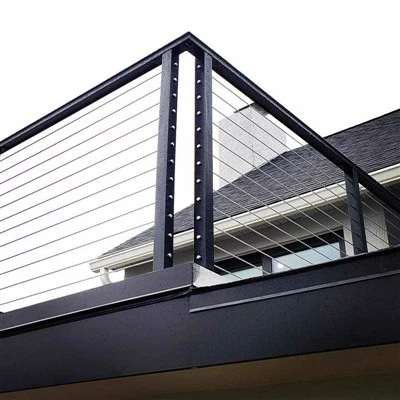
First off, let’s get one thing straight: stainless steel railing weight isn’t a one-numbers-fits-all game. You can’t just pull a random number off a spec sheet and call it done—factors like type of stainless steel, profile shape, wall thickness, and even small details like end caps or decorative balusters all add up. I learned this the hard way back in 2014, when I quoted a residential job for a client in Seattle. I used a generic 10kg per meter number I’d seen online, ordered material, and got to the site only to realize the client wanted a modern square tube top rail instead of the round one I assumed. By the time I corrected the order, I’d missed my installation window and ate the cost of a rush delivery. That mistake turned me into a stickler for breaking down every variable, so let’s walk through them step by step.
First, the base of it all: the type of stainless steel. Not all stainless is the same, and its density directly affects weight. Most railings we sell fall into two grades: 304 and 316. Grade 304 is the workhorse—cheap, easy to fabricate, and perfect for indoor areas or outdoor spaces that aren’t exposed to saltwater or heavy coastal humidity. Its density is 7.93 grams per cubic centimeter (g/cm³), which translates to about 7930 kilograms per cubic meter. Grade 316, on the other hand, has molybdenum added to resist corrosion, making it ideal for beaches, pool areas, or industrial settings where chemicals or salt are present. It’s slightly denser, at 8.0 g/cm³, so a railing made with 316 will weigh a tiny bit more than the same profile in 304—usually less than 2% difference, but worth noting for precision orders.
Next, the big one for weight: the railing’s profile. Most stainless steel railings use three main components that you need to calculate total weight: the top rail, the bottom rail (if we’re talking about a two-rail system), and the balusters (the vertical pieces between the rails). Let’s break down each of these with real numbers I actually use in my quoting process.
Top rails are the most noticeable part, and their size is the biggest driver of weight. Common sizes are 42mm round, 50mm round, 60mm round, and 40mm square, all with standard wall thicknesses of 1.2mm, 1.5mm, or 2.0mm. To calculate the weight of a hollow metal tube (which is what railings are), the formula is simple: Weight per meter = (Outer diameter – Wall thickness) × Wall thickness × 0.02466. That 0.02466 is a constant I memorized years ago for steel, and it works for stainless steel too, adjusted slightly for grade, but like I said, the difference is negligible for most projects. Let’s test this with a real example: a 50mm round top rail in 1.5mm wall thickness, grade 304. Plugging in the numbers: (50 – 1.5) × 1.5 × 0.02466 = 48.5 × 1.5 × 0.02466 ≈ 1.79 kg per meter. If it’s 2.0mm wall thickness, that jumps to (50 – 2) × 2 × 0.02466 = 48 × 2 × 0.02466 ≈ 2.37 kg per meter. That’s a 32% difference just from adding half a millimeter of wall thickness—easy to overlook if you’re not checking the spec sheet.
Bottom rails are almost identical in size to top rails for a balanced look, so their weight is the same formula. For a two-rail system, you add the top and bottom rail weights together. If you’re doing a single-rail railing (common for modern minimalist designs), you skip the bottom rail, cutting the total weight roughly in half for that component.
Then we have balusters. These are the vertical bits, and they come in shapes too: round, square, rectangular, or even decorative custom shapes. Their weight depends on their size, wall thickness, and spacing. A common round baluster is 10mm diameter with 1.0mm wall thickness, spaced every 100mm along the railing run. Let’s calculate that: each 1-meter run would have 10 balusters (since 100mm spacing means 10 per meter). Each baluster is 1.0m long, so one baluster’s weight is (10 – 1) × 1 × 0.02466 = 9 × 0.02466 ≈ 0.22 kg. Times 10 balusters, that’s 2.2 kg per meter from balusters. If you use thicker 12mm balusters or 1.2mm wall thickness, that jumps to around 0.30 kg per baluster, or 3.0 kg per meter. Square balusters are slightly heavier for the same overall size, too—for example, a 12mm square solid baluster (wait, some are solid, not hollow!) would weigh differently. Solid balusters use the density number directly: (12mm × 12mm × 1000mm) = 144,000 mm³ = 0.000144 m³. Times 7930 kg/m³ = ~1.14 kg per meter, which is way heavier than a hollow baluster of the same outer size. That’s why I always ask clients if they want hollow or solid balusters—solid looks sleek, but it adds significant weight and cost.
Small add-ons add up too, and I never forget these because they’re the ones that push a project over budget if I miss them. End caps for top and bottom rails weigh almost nothing, but decorative caps on balusters? A chrome-finish cap can add 0.05 kg per baluster, which for 10 per meter is 0.5 kg total. Mounting brackets that attach the railing to the floor or wall—stainless steel brackets usually add 0.1 to 0.2 kg per bracket, and you’ll need at least two per meter (one at each end, sometimes a mid-point for longer runs). All in all, these small parts can add 5-10% to the total weight per meter, so I always build a 10% buffer into my calculations to avoid surprises.
Now let’s put this all together with a real-world example, something I quoted last month for a 10-meter residential balcony railing in Portland, OR. The client wanted a two-rail system, grade 304, no saltwater exposure, so 1.5mm wall thickness to keep it sturdy but not overly heavy. Top rail: 50mm round, 1.5mm wall = ~1.79 kg/m. Bottom rail: same as top, 1.79 kg/m. Balusters: 10mm hollow round, 1.0mm wall, spaced 100mm = 2.2 kg/m. Add-ons: brackets and caps = ~0.4 kg/m. Total weight per meter: 1.79 + 1.79 + 2.2 + 0.4 = ~6.18 kg per meter. That’s a solid number, easy to order, and when we installed it, the client was happy with how it felt—sturdy enough to lean on, but not so heavy that it was hard to handle during installation.
Wait, but what about common misconceptions? I get a lot of questions like, “Is a heavier stainless steel railing always better?” The short answer: no. A cheap railing with extra thick walls might be heavy, but if it’s made with low-quality stainless that rusts in six months, the weight doesn’t matter. Conversely, a well-designed 1.2mm wall thickness railing for a low-traffic indoor deck is fine—it’s lighter, cheaper, and meets building codes for most residential projects. The key is matching weight to the job. For a commercial stairway where people are grabbing the rail as they go up and down, you want a bit more weight (1.5-2.0mm wall) for rigidity—you don’t want a handrail that flexes when someone leans on it. For a small indoor balcony where foot traffic is light, 1.2mm wall is more than enough, and it’ll save you money.
Another thing to mention: building codes. Most regions have minimum weight requirements for railings, and weight ties directly to structural integrity. In the US, for example, IRC (International Residential Code) requires railings to support 100 pounds per linear foot, which translates to ~148.8 kg per meter, but that’s a load test, not just the railing’s own weight. Wait, that’s a good distinction—we’re talking about the railing’s self-weight here, not the load it can hold. The self-weight numbers we’ve been discussing are just how much the railing materials weigh, which is important for ordering material, calculating shipping costs, and making sure your supports can hold the total weight. Shipping is a big one—stainless steel is heavy, so knowing the weight per meter helps me give clients accurate shipping quotes instead of “we’ll get back to you” surprises. Last year, a client in Boston asked for 50 meters of railing, and if I’d just used a generic 7 kg/m number, I would have quoted shipping for 350 kg, but when I broke down the actual components, it was 310 kg, saving them $200 on shipping. That’s the kind of small detail that builds trust.
Now, if you’re trying to calculate the weight of a railing you already have, or one you’re ordering from another supplier, double-check their specs. Some suppliers will list only the top rail weight and not add balusters or add-ons, which can lead to wrong orders. I always give my clients a full breakdown: top rail weight, bottom rail weight (if applicable), baluster weight, add-ons, and total per meter, so there’s no confusion.
At the end of the day, stainless steel railing weight is all about context. It depends on the grade of steel, the profiles you choose, the wall thickness, and even little details like decorative accents. As a supplier, I don’t just send you a number and call it done—I walk through your project, ask about the location, the traffic it’ll get, and your budget, then recommend the right profile and thickness to get the perfect weight for your needs.
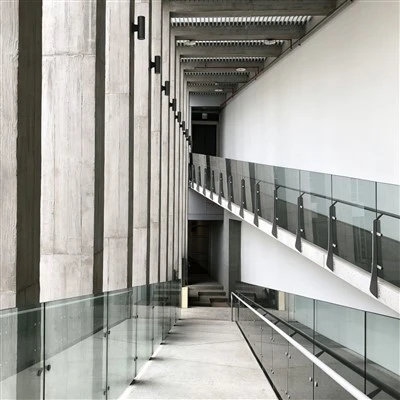
If you’re planning a project—whether it’s a residential deck, commercial stair, pool enclosure, or anything in between—and want an accurate, no-surprises quote for stainless steel railings, I’m here to help. Drop a note, tell me about your space, and I’ll give you a full breakdown of weight, material, and cost, tailored just for you. No generic numbers, no hidden fees, just honest answers from someone who’s been in the industry long enough to know that the best projects start with clear, reliable info.
Stainless Steel Railing References:
- Stainless Steel Weight Calculation Formulas, American Iron and Steel Institute, 2021.
- Building Code Requirements for Railings, International Code Council, 2022.
- Material Density Data for Common Alloys, Nickel Institute, 2020.
ZP Aluminum Co., Ltd.
ZP Aluminum Co., Ltd. is one of the most professional stainless steel railing manufacturers and suppliers in China. With abundant experience, we warmly welcome you to wholesale customized stainless steel railing made in China here from our factory. If you have any enquiry about quotation, please feel free to email us.
Address: LEPING INDUSTRIAL ZONE, SANSHUI DISTRICT, FOSHAN, GUANGDONG, CHINA
E-mail: general@zp-aluminum.com
WebSite: https://www.zp-railing.com/
