Hey there! I’m a supplier of aluminum cable trays, and today I wanna chat about the installation regulations for aluminum cable trays in a power station. Aluminum Cable Tray

Why Aluminum Cable Trays?
First off, let me quickly tell you why aluminum cable trays are a top – pick in power stations. Aluminum is lightweight, which makes it easier to handle during installation. It also has good corrosion resistance, especially in the often – harsh environments of power stations. And it’s got decent electrical conductivity, which can be a plus in some applications.
Design Considerations
Load Capacity
The load that the cable tray will need to bear is a crucial factor. In a power station, cables can be thick and heavy, especially those used for high – voltage transmission. You gotta calculate the total weight of all the cables that will be placed on the tray, including future expansions. We usually design our cable trays to handle a specific load per unit length. For example, depending on the type and size of the tray, it could handle anywhere from 20 to 100 kilograms per meter. This load capacity should account for the weight of the cables themselves, any additional equipment like cable supports, and the dynamic loads that might occur during maintenance or operation.
Cable Arrangement
How you arrange the cables on the tray also matters. In a power station, there are different types of cables, such as power cables, control cables, and communication cables. These should be separated to prevent interference. For example, power cables carrying high currents can generate electromagnetic fields that might affect the performance of control or communication cables. You can use dividers in the cable tray to keep different types of cables separate. It’s also a good idea to leave some space between the cables for ventilation, which helps in heat dissipation.
Environment
Power stations can have a variety of environmental conditions. If the power station is near the coast, there’s a high chance of saltwater corrosion. In such cases, our aluminum cable trays are treated with special coatings to enhance their corrosion resistance. In indoor power stations, the temperature and humidity levels need to be considered. High temperatures can degrade the cable insulation and might also affect the structural integrity of the cable tray over time. So, the cable tray should be installed in areas where the temperature is within the recommended range.
Installation Process
Mounting
The way you mount the aluminum cable tray is super important. You can use either overhead or floor – mounted systems. For overhead mounting, you need to use strong and reliable hangers. These hangers should be attached to a stable structure, like the building’s steel frame or beams. The spacing between the hangers depends on the load capacity of the cable tray and the type of tray. Generally, for light – duty trays, the hanger spacing can be a bit wider, say around 1.5 – 2 meters. But for heavy – duty trays, you might need to reduce the spacing to 1 – 1.5 meters to ensure proper support.
If you’re going for floor – mounted installation, you need to make sure the surface is level and strong enough to support the weight of the tray and the cables. You can use brackets to secure the tray to the floor. The brackets should be firmly fixed to prevent any movement or vibration.
Connections
The connections between different sections of the cable tray are also critical. The joints should be smooth and tight to ensure that the cables can move freely through the tray without getting caught. We use special connectors for our aluminum cable trays, which are designed to be easy to install and provide a good electrical connection. This is important in case you need to ground the cable tray for safety reasons. When connecting the sections, make sure that the alignment is perfect to avoid any sharp edges or gaps that could damage the cables.
Earthing
Earthing is a must in a power station. The aluminum cable tray needs to be properly earthed to prevent electrostatic charges from building up. You can connect the cable tray to the main earthing system of the power station using earthing straps. These straps should have a low resistance to ensure that any electrical faults can be safely conducted to the ground. Regular inspections should be carried out to make sure that the earthing connections are intact.
Safety Regulations
Fire Safety
In a power station, fire safety is a major concern. Our aluminum cable trays are designed to have a certain level of fire resistance. However, you should also consider using fire – stopping materials at the entry and exit points of the cable tray, as well as at any openings or joints. These fire – stopping materials can prevent the spread of fire and smoke through the cable tray system.
Accessibility
The cable tray should be easily accessible for maintenance and inspection. You need to leave enough space around the cable tray so that workers can reach all parts of it. There should also be clear pathways for workers to move around the power station without tripping over the cable tray or getting in the way of the cables.
Signage
Proper signage is important. You should label the cable tray to indicate the type of cables it contains, the direction of the cables, and any safety instructions. This helps workers quickly identify the cables they need and also ensures that they follow the correct safety procedures.
Maintenance
Regular Inspections
Regular inspections of the aluminum cable tray are essential. You should check for any signs of damage, such as cracks, deformation, or corrosion. Also, check the tightness of the connections and the integrity of the earthing system. Any loose connections or damaged parts should be repaired or replaced immediately to prevent any potential problems.
Cleaning
Over time, dirt and debris can accumulate on the cable tray. This can not only affect the appearance but also the performance of the cables. You can use a soft brush or a compressed air blower to clean the cable tray. Be careful not to damage the cables or the tray during the cleaning process.
Conclusion
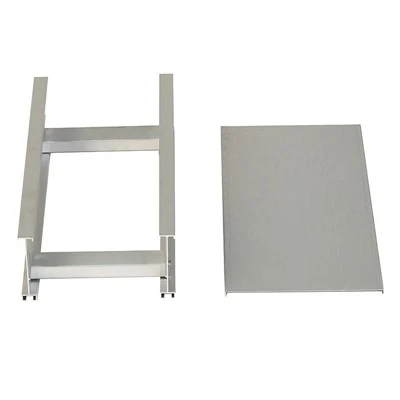
So, there you have it, all the important installation regulations for aluminum cable trays in a power station. From design considerations to safety regulations and maintenance, it’s crucial to follow these guidelines to ensure the safe and efficient operation of your power station.
Cable Tray Systems If you’re in the market for high – quality aluminum cable trays that meet all these regulations, I’d love to have a chat with you. Whether you’re building a new power station or upgrading an existing one, our products can give you the reliability and performance you need. Just reach out for a friendly chat and we can discuss how our aluminum cable trays can fit your requirements.
References
- Electrical Installation Standards Handbook
- Aluminum Association guidelines for cable tray applications
- Power Station Safety Manuals
Hebei Jinglang Industrial Co., Ltd.
As one of the most professional aluminum cable tray manufacturers and suppliers in China, we also support customized service. We warmly welcome you to wholesale high quality aluminum cable tray in stock here from our factory. If you have any enquiry about quotation, please feel free to email us.
Address: Nanxinzhuang Village, Daweihe Hui and Manchu Township, Wen’an County, Langfang City, Hebei Province
E-mail: 18231629992@163.com
WebSite: https://www.jinglangcabletray.com/
