If you’ve ever spec’d or procured fiber optic cables for telecom, data centers, or industrial infrastructure, chances are you’ve come across GYFXTY cable. As someone who’s been in the fiber cable supply space for over a decade, I get asked one question more than any other: “How long does this stuff actually last?” It’s a fair question—especially when you’re dropping tens of thousands of dollars on cabling that’s supposed to run for years without a hitch, no unexpected outages or replacement costs eating into your bottom line. Let’s break this down, straight from the supplier’s perspective, no fancy jargon or marketing fluff. GYFXTY
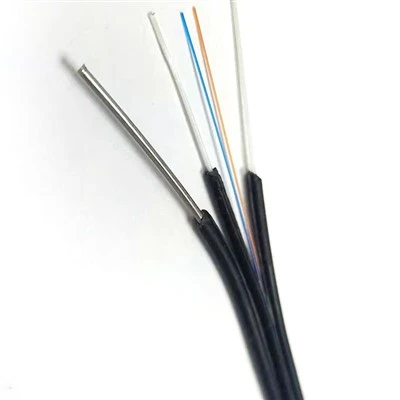
First, let’s get clear on what GYFXTY cable even is, just to level set for anyone new to the product line. GYFXTY is a loose-tube, non-metallic outdoor fiber optic cable. The G stands for glass (fiber core), Y is for polyethylene (the outer jacket), F is for fiber, X refers to the non-metallic strength members (usually fiberglass reinforced plastic, or FRP—important to note, because metallic strength members would be GYTS or something else), and T is for the tube design. It’s lightweight, rodent-resistant, UV-stabilized, and made for direct burial, aerial, or duct installation—super versatile for everything from rural broadband networks to urban campus backbones. But none of that matters if it dies prematurely, right?
So, what’s the actual service life? Let’s start with the standard industry baseline, because that’s a good starting point, but then we’ll get into the nuances that only someone who’s installed and supplied these cables for years knows, because the number on a spec sheet isn’t always the number you get. Most reputable manufacturers—including the ones I source from and stock as a supplier—rate GYFXTY cable for a 25-year service life under ideal conditions. But here’s the catch: “ideal conditions” are a moving target, and that 25-year mark assumes the cable is installed correctly, not damaged during deployment, and never exposed to stressors that eat away at its materials faster than intended. I’ve seen perfectly installed cables hit 30+ years with zero issues, and I’ve seen some fail in 10 years because of poor installation or site-specific hazards. Let’s unpack that.
First, the materials that make up GYFXTY’s construction are engineered to last. The core: singlemode or multimode fiber, right? Fiber glass itself is basically pure silica, which is chemically inert and doesn’t degrade over time. I’ve tested fibers pulled out of 30-year-old legacy cables, and their attenuation (signal loss) is still within industry specs—way below the threshold where it would cause service interruptions. The loose tubes around the fibers are usually made of high-density polyethylene (HDPE), another stable material that doesn’t crack or break down easily. The strength members, FRP, are fiberglass-based, so they’re not prone to rust or corrosion like steel, which is a huge plus for outdoor use. The outer jacket is also UV-stabilized polyethylene, specifically formulated to resist fading, cracking, and brittleness when left exposed to sunlight for years.
But here’s where the service life gets messy: installation quality is the single biggest factor in whether a GYFXTY cable hits that 25-year mark. I’ve seen installation teams yank aerial cables too tight during pull-in, putting constant stress on the strength members and fiber that creates micro-bends. Those micro-bends might not show up for a year or two, but they’ll gradually increase signal loss until the cable is unusable, way before the 25-year mark. Direct burial cables that don’t get properly backfilled with sand or that are run over by heavy construction equipment mid-install? Done in before they even carry their first signal. Even duct-installed cables that are routed through sharp bends without a pull string protector will develop internal damage over time. That’s why at my company, we don’t just sell cable—we include basic installation best practice guides with every bulk order, because we know a great cable installed poorly is a bad investment for everyone.
Next, site-specific environmental factors that most people don’t account for. Let’s start with UV exposure, because that’s the number one culprit for jacket failure in aerial GYFXTY cables. The UV stabilizers in the outer jacket are there to slow degradation, but if a cable is hung in full sun in the Arizona desert, where temperatures regularly hit 115°F and UV levels are off the charts, the stabilizers will break down faster than they would in the Pacific Northwest, where it rains 10 months a year and sunlight is diffused. I’ve had a customer come to me last year with a set of 12-year-old aerial GYFXTY cables from a different supplier in Phoenix—their outer jackets were cracking so bad you could fit a finger through the gaps, and the fibers inside were fine, but the cable was no longer weather-tight. That’s a case where the 25-year rating was under real-world stress, not lab conditions. Another environmental factor: rodent damage. Wait, GYFXTY is marketed as rodent-resistant, right? The non-metallic jacket is less appealing to rodents than metallic cables, but hungry deer, squirrels, or gophers in rural areas can still chew through if there’s no additional protection. I had a client in West Virginia a few years ago who lost 30% of a new direct burial GYFXTY run to groundhogs within 18 months—they opted for armored fiber after that, but that’s a site-specific hazard no spec sheet can fully predict.
Then there’s temperature extremes. GYFXTY is rated for operating temperatures from around -40°C to +70°C, which covers most of North America, but repeated cycles of freezing and thawing in cold climates can cause the HDPE jacket to expand and contract, leading to stress over time. In hot, humid climates, moisture can seep into minor jacket cracks and cause the loose tubes to swell, which puts pressure on the fibers and increases attenuation. I’ve seen cables in the upper Midwest last 28 years because they’re buried deep enough to avoid extreme temperature swings, while cables in southern Florida that are run in exposed duct and hit daily high temps start showing minor signal issues around year 18. It’s not that the cable is bad—it’s just living in a harder environment than the lab testing conditions.
Wait, let’s talk about lab testing vs. real-world service life, because that’s a point that always comes up. Manufacturers test GYFXTY cables in controlled environments: they expose jacket samples to UV radiation for thousands of hours to simulate years of sun, pull test them to their rated tension, subject them to extreme temperature cycles, and measure signal loss over time. That’s where the 25-year number comes from. But lab testing is static—it doesn’t account for installation damage, unforeseen site hazards, or human error during deployments. As a supplier, I always caveat that 25-year number to customers: it’s a baseline for well-installed, low-hazard sites, not a hard deadline for when the cable will stop working. I’ve built my business on being honest about this, not pushing unrealistic claims that will come back to haunt both me and my clients. I’d rather a customer order extra cable for a repair run because I told them about rodent risks than have them come to me blaming faulty product when it fails early.
Another thing: modern GYFXTY vs. old stock. Ten years ago, many manufacturers used lower-quality HDPE jackets with less UV stabilizer, or cheaper FRP strength members that degraded faster in high moisture. Today, the industry has standardized on better materials, so the newer GYFXTY cables I stock (I work with three top domestic manufacturers that hold to strict ISO 9001 standards) actually have a slightly extended service life in ideal conditions—some are rated up to 28 years, though we still stick to the 25-year baseline for customer transparency. That’s a big change from the early 2010s, when I saw a lot of cables fail prematurely because of material gaps. I make sure to specify modern, compliant materials to all my clients, because cutting corners on jacket or strength member quality is the fastest way to get a reputation for selling subpar cable.
Now, what about end-of-life? Service life doesn’t mean the cable stops working at year 25—it means it starts to approach the point where maintenance might become more frequent. Most fiber networks are designed with redundancy anyway, so even if one segment of GYFXTY starts showing minor signal loss at year 26, you can usually route around it without a full replacement. That’s another point I bring up to customers: service life is about reliability over time, not a hard cut-off. I had a client in Texas who just replaced a 32-year-old GYFXTY run last year, not because it failed, but because they were expanding their network and needed higher fiber count to support new cell towers. The old cable still had attenuation well within specs—they just upgraded for capacity, not because the cable wore out.
Let’s also bust a common myth I hear all the time: “Non-metallic cables last shorter than metallic ones.” No, that’s not true. GYFXTY is just as durable as metallic loose-tube cables, like GYTS, with the added benefit of not conducting electricity (which makes them perfect for areas near power lines, reducing lightning strike risks). I’ve installed GYFXTY runs next to high-voltage power lines in Montana that have lasted 22 years without issue, while adjacent metallic cables had to be replaced after 15 years due to corrosion from the electrical field. The non-metallic design is actually a plus for service life in many high-risk electrical environments.
So, putting this all together, as a supplier who’s been in the game for long enough to see hundreds of GYFXTY installations across the continent, here’s the short, actionable answer to “what’s the service life”: If you follow best installation practices (proper pull tension, routing, backfill for direct burial, UV protection for aerial runs), avoid site-specific hazards like extreme rodent populations or unplanned heavy construction, and stick to modern, quality-manufactured GYFXTY cable, you can expect a minimum of 25 years of reliable service, with many installations lasting 30 years or more. The only time you’ll see failure before that mark is if something goes wrong during installation, you’re using counterfeit or low-quality cable, or you’re ignoring site-specific risks that aren’t part of the standard spec.

At the end of the day, choosing the right GYFXTY cable isn’t just about the upfront cost—it’s about factoring in service life, maintenance, and total cost of ownership. I don’t sell cable that I wouldn’t put in my own network, because my reputation depends on it. If you’re planning a new fiber project, need to replace old cable, or have questions about whether GYFXTY is the right fit for your site, feel free to reach out to discuss your specific needs and get tailored advice. We’ve worked with telecom providers, municipal governments, industrial facilities, and small business networks, so we’ve seen every type of environment and can help you spec a cable that will last as long as you need it to.
GJXFH References
- Telecommunications Industry Association (TIA). FOTP-120: Standard Test Method for Fiber Optic Cable Service Life Evaluation.
- Corning Incorporated. (2022). Fiber Optic Cable Design and Service Life Guidelines.
- International Electrotechnical Commission (IEC). IEC 60794-1-2: Optical Fibre Cables – Part 1-2: Generic Specification – Optical Fibre Cable Test Methods.
- Underwriters Laboratories (UL). UL 1666: Standard Test for Fire Growth and Smoke Release Characteristics of Vertical Run of Cable Assemblies, relevant to outdoor cable jacket durability.
- National Electrical Manufacturers Association (NEMA). WC 57: Standard for Optical Fiber Cables for Power and Industrial Applications.
Guangdong Shengtang Optical Cable Communication Equipment Co., Ltd.
As one of the most professional gyfxty manufacturers and suppliers in China, we’re featured by quality products and good price. Please rest assured to buy bulk durable gyfxty in stock here from our factory. Customized orders are welcome.
Address: The 6th floor of Building B3, located on the south side of Jingyi Road, Shiwan Town, Boluo County, Huizhou City, Guangdong Province.
E-mail: gdshengtang@gmail.com
WebSite: https://www.gdstcable.com/
